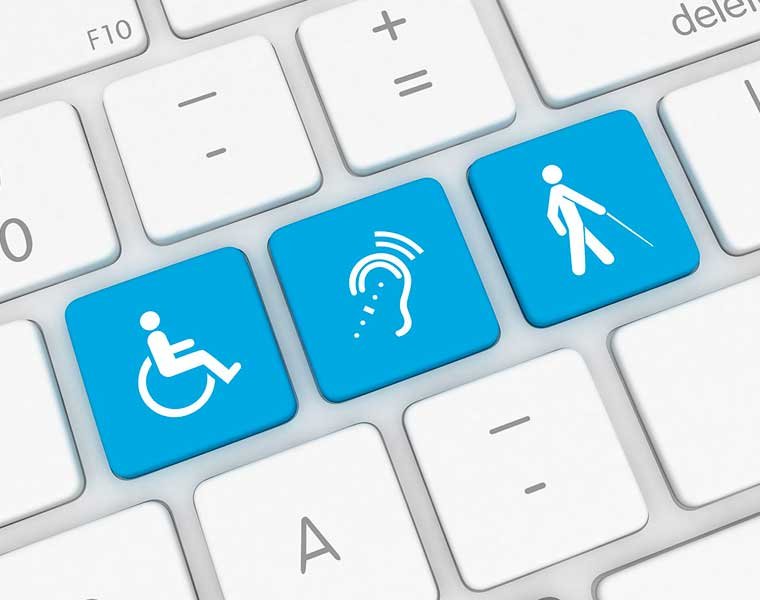
What if your website was accidentally turning away a quarter of your potential customers? For many business owners, this is a surprising and costly reality. Website accessibility is the practice of ensuring your digital infrastructure functions flawlessly for everyone, including the one in four individuals who live with a temporary or permanent disability. Prioritizing accessibility is not just about inclusivity — it is a critical operational standard that opens your business to a massive audience while protecting your enterprise from liability.
The business case for digital accessibility.
Mitigating legal and regulatory risk: In many global jurisdictions, digital accessibility is a strict statutory requirement. In the United States, federal courts actively apply the Americans with Disabilities Act (ADA) to public-facing commercial websites. Failing to meet established compliance guidelines leaves your business heavily exposed to costly regulatory audits and predatory civil lawsuits.
Capturing a wider market share: Over one billion people worldwide navigate the web with some form of disability. If your site features broken navigation, poor contrast, or unparseable forms, you are completely blocking potential clients from purchasing your products or booking your services. An accessible platform ensures you never miss out on these market segments.
Elevating core SEO and user experience: Accessibility standards directly align with modern user experience engineering and search engine optimization. Clean heading hierarchies, explicit form labels, and descriptive asset tagging make your site inherently easier to navigate for every single human visitor, while simultaneously giving search engine crawlers a highly indexable map of your site.
“An accessible website is fundamentally good for people, good for search engine visibility, and essential for protecting your business.”
Core engineering standards for accessible design.
Achieving compliance requires moving past automated overlay widgets and implementing true, native semantic design standards across your entire application:
- Programmatic image description (Alt Text): Every meaningful visual asset must include descriptive alternative text within the HTML code. This allows screen-reading software to accurately communicate the visual context to visually impaired users, rather than reading out meaningless, raw file names like
image1.jpg. - Total keyboard navigation support: A compliant website must be completely operable without requiring a mouse. Users relying on assistive technologies, sip-and-puff devices, or basic keyboard navigation must be able to fluidly tab through your menus, links, and interactive components in a logical visual order.
- High-contrast visual hierarchy: Text elements must adhere to strict contrast ratios against their background colors to remain readable for users with low vision or color blindness. Designing with deep contrast—such as dark text on a crisp, light background—ensures readability across all device types and lighting conditions.
- Semantic heading structures and skip links: Utilizing a strict nesting architecture of HTML headings (from
<h1>down to<h3>) allows screen readers to quickly parse and jump between sections. Incorporating invisible “skip navigation” links further enhances UX by letting assistive devices bypass repetitive header menus to reach the main content instantly. - Accessible input forms and media captions: Contact and checkout forms must feature explicitly paired text labels and clear, helpful validation error messages. Additionally, any video or audio assets hosted on your platform must include synchronized captions or full textual transcripts to accommodate deaf or hard-of-hearing users.
Securing your digital storefront.
Website accessibility is not a temporary trend or a superficial design preference; it is a fundamental pillar of modern software engineering. By ensuring your platform treats every visitor with equal functionality, you insulate your brand from legal friction, enhance your organic search performance, and build a highly trustworthy digital asset.
If you want to evaluate your current platform for compliance flaws or build a new, universally accessible web presence from the ground up, let’s connect to review your website accessibility requirements.